What a machine decides at BNKA and what a person decides
Saying "we use AI" means nothing. This is the concrete map: which parts of the product have models, which decisions are never automated, and what we…
Read more →
BNKA culture
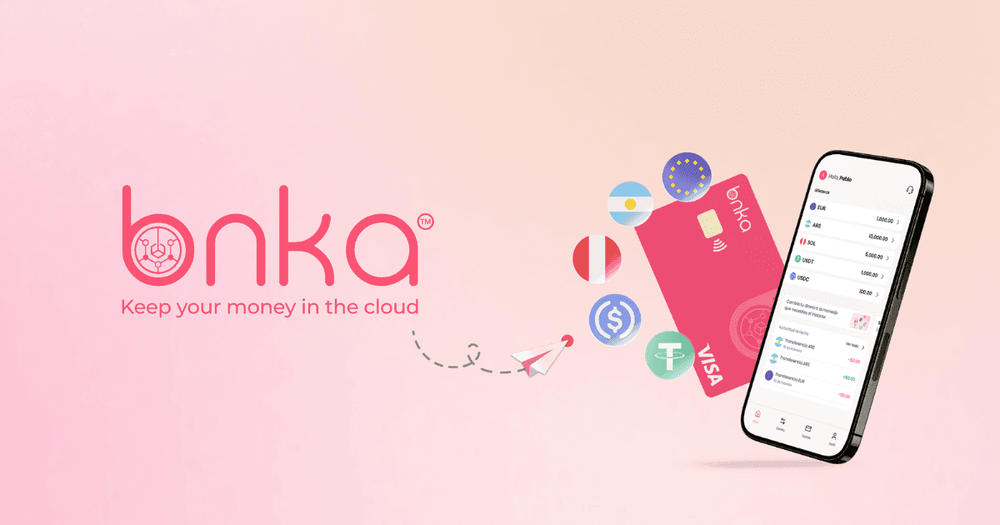
BNKA is not a bank. It’s a digital wallet that partners with regulated entities in Europe to offer financial services with legal and regulatory backing, secure technology, and a user-centered experience.
Working for a company in another country, getting paid by clients nine thousand kilometers away, or supporting family from abroad stopped being an exception. What did not change at the same pace are the tools: most financial products are still designed for someone who lives, earns, and spends in a single country.
BNKA is a technology platform for managing money that moves between countries. Everything happens in the app: registration, identity verification, incoming payments, currency exchange, and transfers.
This is worth stating precisely, because it is the part most often misread. BNKA is not a bank or a neobank. Financial services are provided by regulated partner entities, which issue the IBAN and execute payment transactions under European rules. The app is the product layer; the license is theirs.
What that difference means in practice is developed in the European IBAN guide.
Three uses cover almost everything:
If the money comes in from outside the euro area, the detail you will be asked for alongside the IBAN is the SWIFT or BIC code.
We would rather have this section in writing before the list of benefits.
| Question | Answer |
|---|---|
| Is it a bank? | No. It is a technology platform. Regulated partner entities provide the service. |
| Is there credit, lending, or an overdraft? | No. Lending money requires a banking license. |
| Is there advice on when to change currency? | No. The app shows the applicable rate and you decide. |
| Can someone else's money arrive in your account? | Your account is for your money. An incoming payment in a third party's name triggers a review. |
That last point generates the most questions, and we cover it fully in why an account goes under review.
There is no single profile. There is a shared need: handling money that crosses a border regularly.
People working for companies abroad and paid in another currency. Freelancers with European clients. Students receiving support from family. People with fixed costs in two countries at once. The self-employed side of it is in Latino freelancers getting paid in euros.
A valid ID document, a phone with a connection, and a few minutes for the identity verification. No office visit and no paperwork to sign.
One detail that saves time: most verification rejections are photo problems, not document problems. Indirect light, the whole document inside the frame, no sleeve over it. And if you do not have an NIE yet, the route is in opening a European IBAN account without an NIE.
The specific conditions and limits of each transaction are published in the FAQ.
User funds are held separately from the company's own funds, in accounts at the regulated entities that provide the payment service. That separation is what makes a transaction frozen by a review still yours.
On the technical side there is encryption, identity verification at registration, and transaction monitoring. On the regulatory side, since October 2025 payment providers in the euro area must offer verification of payee on euro transfers: the name is checked against the IBAN holder before execution. The timings of each rail are in SEPA, SWIFT and how long a transfer really takes.
And if any term in this article sounds like jargon, it is defined in the glossary.
Informational content. This does not constitute financial, legal, tax or investment advice.
No. BNKA is a technology platform. Payment services are provided by regulated partner entities, which issue the IBAN and execute the transactions. That distinction matters: it determines which products exist and which rules apply to each movement. There are no credit products, because lending money requires a separate banking license.
Receive your salary in euros, receive SEPA transfers from any country in the area, send euro transfers, and get paid by clients if you are self-employed. The condition that weighs most is that the account is in your name and that the name is written in full and exactly as it appears on your ID.
Not always. European anti-money-laundering rules require reliable identification of the person, and a valid passport plus a biometric check meets that requirement. The NIE is a Spanish administrative identifier, useful for Spanish procedures, and some procedures will ask for it regardless because of the procedure itself.
The app works with euros and with the currencies of the Latin American corridors we have open: Argentine peso, Peruvian sol, and Colombian peso. Each corridor has its own local rail, hours, and beneficiary identification requirements, so it is worth reading the country page before your first transfer.
Saying "we use AI" means nothing. This is the concrete map: which parts of the product have models, which decisions are never automated, and what we…
Read more →Real stories about money, migration, and life abroad Moving to a new country changes everything — how you work, how you live, and especially how you…
Read more →Comparing ways to send money to Colombia by the fee leaves out what weighs most: the money is handed over converted into pesos, and four account…
Read more →Start today
Open your account from your phone in minutes and discover the services available to you.
Free download · Sign up with your passport · Exchange rate shown before you confirm