In Colombia the money lands in pesos, whatever you decide
Comparing ways to send money to Colombia by the fee leaves out what weighs most: the money is handed over converted into pesos, and four account…
Read more →
Borderless money
More and more people are working with clients or companies from other countries. Whether as a freelancer, freelancer, digital nomad or just as someone living outside your home country - receiving payments from abroad can be a frequent and often complicated need.

Getting paid by a client or a company in another country stopped being unusual. What is still common is that the payment gets held, that less arrives than expected, or that nobody explains why it is taking so long.
This article is about that: what happens along the way and which part is up to you.
Four causes cover almost everything:
Less than it looks. Your full name exactly as it appears on your ID, and an IBAN in your name.
Nothing requires that IBAN to be from a specific country. Within the SEPA area, rejecting an IBAN over its country of issue is prohibited, and your client's admin department will still occasionally try. How to resolve it, with the argument in writing, is in getting paid in euros without a European bank account.
| Route | Timing | What can stop it |
|---|---|---|
| Standard SEPA in euros | Next business day at the latest | A beneficiary name that does not match |
| SEPA instant | Seconds, if both institutions support it | One of the two not supporting it |
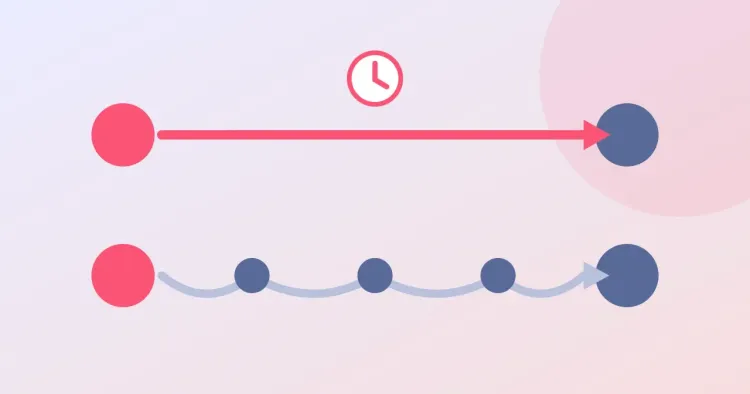
| International outside SEPA | Variable, depending on intermediaries | Hours, checks and holidays at each link |
The detail of why these three cases have nothing in common is in SEPA, SWIFT and how long a transfer really takes.
If you are going to spend it in euros, there is no conversion and no exchange cost. If you are sending part home, that is where the exchange rate appears, and with it the real difference between providers.
There is only one honest way to compare: how much lands in the destination account. Each pair has its page with the detail, for example euro and Argentine peso. And the local leg is on the corridor page: Argentina works with CBU, CVU and alias, while Peru and Colombia ask for different details.
It comes up constantly: while their own account is in verification, someone asks to be paid into a relative's or a friend's account.
Do not do it. Receiving someone else's income is exactly the pattern prevention controls flag, and the one who ends up blocked is the holder of the account that received it. How that mechanism is used to recruit accounts is in the scams that hit Latinos hardest.
The invoice or work order. The contract. And the transfer receipt with the date and the payer's full name.
This is not bureaucracy for its own sake: it is what gets asked for to evidence the source of an income, and also what you need for a lease, a loan or a residence renewal. One folder per year and one subfolder per client is enough.
The conditions and limits of each transaction are published in the FAQ, and the technical terms in the glossary.
Informational content. This does not constitute financial, legal, tax or investment advice.
In the vast majority of cases because the beneficiary name does not match the account holder. Since October 2025 payment providers in the euro area must offer verification of payee on euro transfers, and one missing surname or a trading name instead of the registered name stops the transaction for manual review.
Your full name exactly as it appears on your ID, an IBAN in your name, and, if the payment leaves from outside the euro area, the institution's SWIFT or BIC code. Give the IBAN in writing with no spaces, never dictated over the phone, and check your name is written the same way on the contract.
It is a bad idea and in practice it goes wrong. An account receiving someone else's income produces exactly the pattern prevention systems flag, with a real risk of a block for the holder. It also leaves you with no traceable record of your own income, which is what gets asked for later for a lease or a residence renewal.
It depends on the rail. A standard SEPA euro transfer credits by the next business day at the latest from when it is sent, and SEPA instant arrives in seconds when both institutions support it. Outside SEPA the transaction passes through intermediary institutions, each with its own hours and checks, and the timing is variable.
Comparing ways to send money to Colombia by the fee leaves out what weighs most: the money is handed over converted into pesos, and four account…
Read more →Comparing routes for sending money to Argentina by the fee leaves out what actually stops a transfer: what kind of account the money lands in, and…
Read more →Comparing ways to send money to Peru by the fee leaves out what weighs most: whether the money arrives at a counter or in an account, and what the…
Read more →Start today
Open your account from your phone in minutes and discover the services available to you.
Free download · Sign up with your passport · Exchange rate shown before you confirm