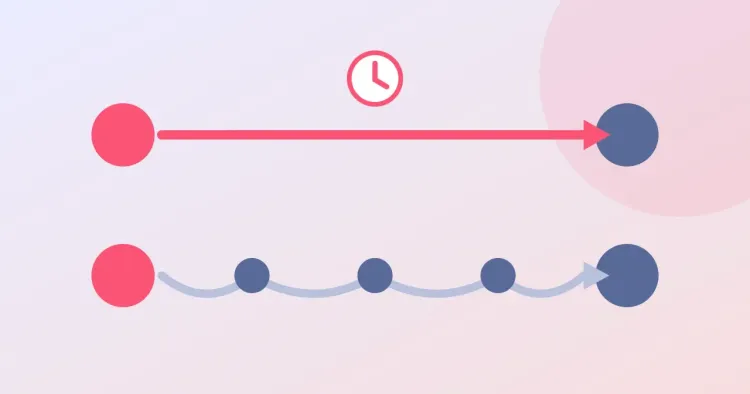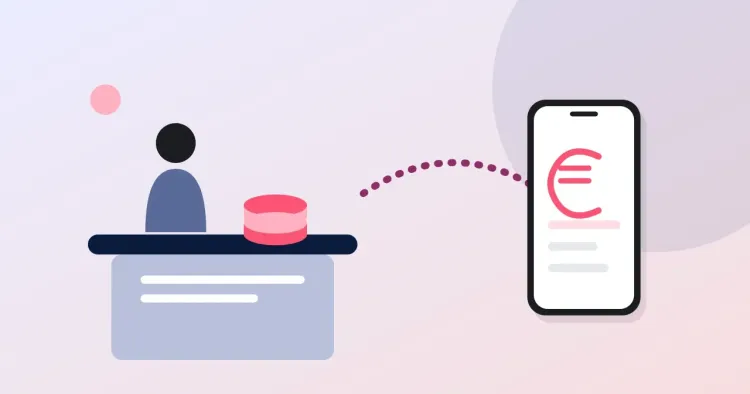
In Colombia the money lands in pesos, whatever you decide
Comparing ways to send money to Colombia by the fee leaves out what weighs most: the money is handed over converted into pesos, and four account…
Read more →
Borderless money
In Colombia your everyday account is in pesos, so the conversion happens no matter what. What changes from one route to another is how many times it converts and who shows you the rate.
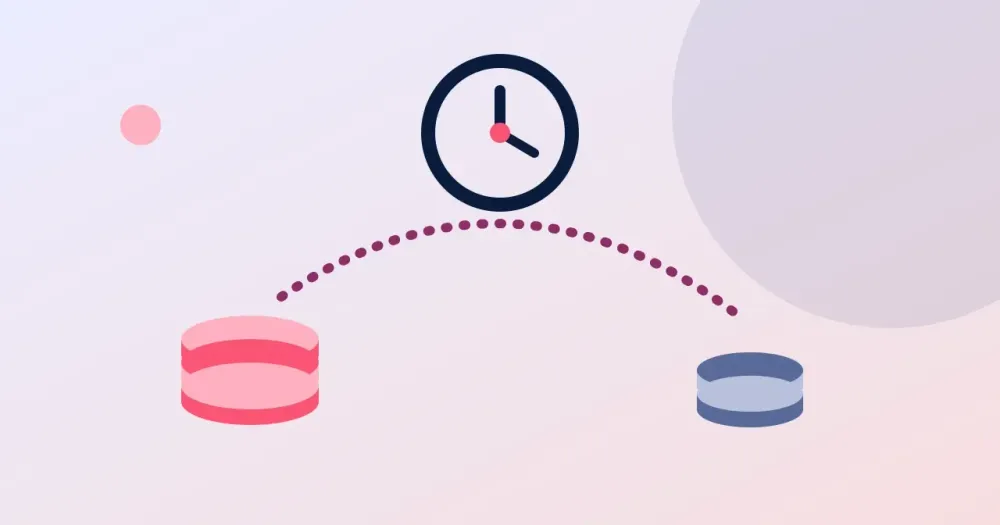
A client in Berlin confirms the payment on a Tuesday. On Thursday pesos show up in an account in Medellín, and the number does not look like the one that left. Between those two days there was at least one conversion, and on most routes there was more than one.
People asking which Payoneer alternative works in Colombia are usually asking about the fee. Here that figure explains even less than it does elsewhere, because the money converts before it touches your account and that price does not travel on the fee line.
In Peru someone can hold one account in soles and another in dollars and decide two things separately: bringing the money in and converting it. That room to maneuver is covered in how you choose the landing currency in Peru.
In Colombia the savings or checking account you pay rent from is in pesos. Structures for holding foreign currency do exist, with their own registration before the Banco de la República, and they are not the ordinary path for someone invoicing a client and wanting the money available that week.
So the question changes shape. It is not whether the money converts, but how many times and at which point in the chain anyone shows you the rate applied.
Underneath the brand names, routes differ on one thing: where the amount sits while it is still not pesos.
| Where it waits | What you control | What you take on |
|---|---|---|
| On the platform that pays you | When you request the withdrawal, and little else | Whatever rate that platform applies the day you ask |
| In an intermediate balance in your name | The timing of the withdrawal and sometimes the payout currency | An extra conversion if the balance currency does not match the payment currency |
| In a euro account in your name | When you convert and how much you convert | The pair moving while the money waits |
| It does not wait: the client transfers straight to your Colombian account | Nothing about the conversion | The rate your institution applies on crediting, which you see afterward |
No row is better in the abstract. The third one only pays off if the destination is in your name and does not charge you for waiting; the last one is the shortest and the one that leaves you least room to step in.
Divide the pesos credited to your account by the gross amount that left the origin. That ratio is the real rate you paid for the route, with the advertised fee, the exchange margin, and any intermediate charge already inside it.
Check that number against the mid-market rate for the pair that same day and you have the full distance. The concept is in what the FX spread is, and the benchmark it is measured against is in what the mid-market rate is.
When a chain converts twice, the second conversion applies to an amount the first one already reduced. No screen adds the two legs together: the origin platform shows its own and your institution shows its own.
Test each route with a small payment before you send the whole invoice through it, and repeat the measurement in different weeks. The pair moves, and the same service can come first one month and third the next.
In Argentina the last leg closes with a CBU or a CVU, and in Peru with a twenty-digit CCI. For a payment coming from abroad, Colombia has no equivalent: you need the account number, the account type, the institution, and the holder's ID.
The number is not the same length at every institution either, so the intuitive check that digits are missing will not catch an error. And marking savings when the account is checking goes through the form without complaint: the withdrawal travels in full and gets rejected on arrival, so you find out once the money is already back at the origin. What happens then is in what a payment return is, and the case with an intermediary in the middle is in where the chain breaks when there is an intermediary.
The other thing that stops payments is the name. Whoever pays you, the intermediate profile, and the destination account all have to point to the same person with the same ID document, and the mismatches that hold a payment are usually tiny. What account ownership is walks through it.
Bre-B is the immediate, interoperable payments system operating in Colombia, and it runs on keys: an alphanumeric string, your phone number, your email, or your ID document, tied to an account or a deposit.
It moves pesos between Colombian accounts at any hour. It is not what you hand a platform abroad today so it can pay you, since that leg still asks for the four account details. Worth being clear about, because the key and the account live in the same app and it is easy to copy the first one assuming it works everywhere.
Colombia's financial transactions tax is triggered when money leaves an account, not when it arrives. A route that lands the money in one place and then makes you move it somewhere else adds a debit you had not counted.
There is a monthly exempt amount on one account the holder designates with their institution, plus conditions for transfers between the holder's own accounts inside the same institution. The current detail is set by the rule: check it with the DIAN and with your institution, not in a blog post.
The actionable part is counting, before you commit to a route, how many transfers it requires once the money is already in Colombia.
BNKA is a technology platform. Financial services are provided by partner regulated institutions, and the terms in force for each operation are in the app and in the terms and conditions.
If what you want is a shorter chain and control over when you convert, a euro destination in your name removes a layer: the money stays in euros until you order the conversion, and then it is withdrawn to your Colombian account. The corridor is at Colombia and the pair at EUR/COP. The wider picture of getting paid from abroad is in the Latino freelancer getting paid in euros.
This is not financial, legal, tax, or investment advice.
That is not the ordinary path. Everyday accounts in Colombia are in pesos, and the structures that allow holding foreign currency carry their own registration before the Banco de la República and are designed for a different kind of operation. What is in your hands is choosing where the money waits before it converts.
Not today. Bre-B moves pesos between Colombian accounts instantly, and that is where it saves you time. A payment coming from outside the country still asks for the account number, the account type, the institution, and the holder's ID.
No. The outcome depends on the pair, the amount, how many conversions the chain has, and the day. Measure it with your own real payments rather than comparing advertised percentages, because each platform advertises a different slice of the journey.
Almost always inside the exchange rate. The fee is the price you can see; the exchange margin is the one baked in, and if the chain converts twice the second conversion is calculated on an amount already reduced. Divide the pesos credited by the gross amount at the origin and compare that against the mid-market rate for the day.
Comparing ways to send money to Colombia by the fee leaves out what weighs most: the money is handed over converted into pesos, and four account…
Read more →Comparing routes for sending money to Argentina by the fee leaves out what actually stops a transfer: what kind of account the money lands in, and…
Read more →Comparing ways to send money to Peru by the fee leaves out what weighs most: whether the money arrives at a counter or in an account, and what the…
Read more →Start today
Open your account from your phone in minutes and discover the services available to you.
Free download · Sign up with your passport · Exchange rate shown before you confirm