In Colombia the money lands in pesos, whatever you decide
Comparing ways to send money to Colombia by the fee leaves out what weighs most: the money is handed over converted into pesos, and four account…
Read more →
Borderless money
In Peru, money from abroad can land in soles or in dollars, and that decision weighs more than the fee. How to compare routes by the amount that ends up credited to your account.
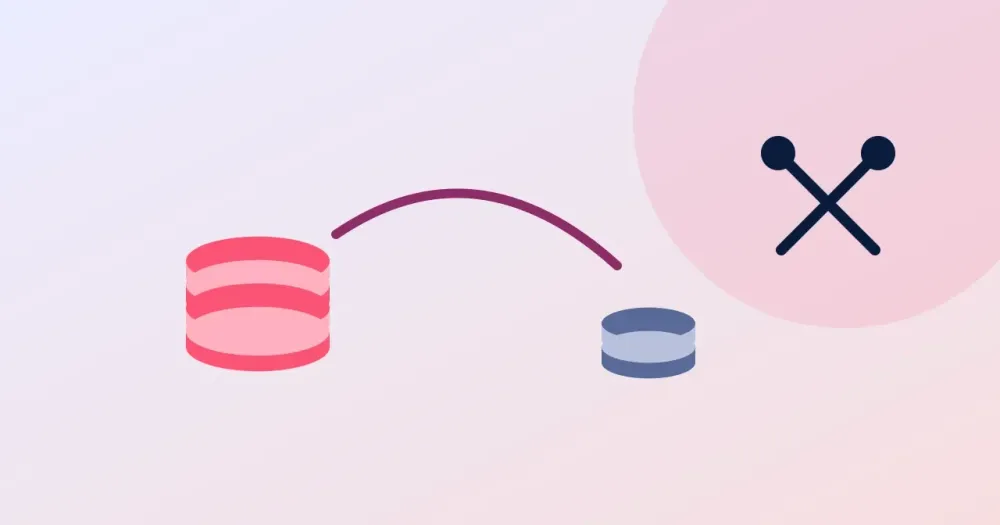
Two people get paid the same amount by the same client on the same day. One receives it in soles and the other in dollars, at the same Peruvian institution, and by the end of the month they do not have the same amount of money. What separates them is not the platform they used, but the point in the chain where the conversion into soles happened.
When someone asks which Payoneer alternative works best in Peru, they are usually asking about the fee. That is the figure that predicts the least about how much money lands in the account.
Holding one account in soles and another in dollars at the same institution is common here, and that changes the question. In many destinations, money from abroad arrives already converted into the local currency and the story ends there. In Peru you can separate two things that usually travel together: bringing the money in and converting it.
Each of those accounts carries its own twenty-digit code and accepts its own currency. Pasting the code of the soles account when you expected dollars ends in a conversion you did not ask for, or in a bounce. The breakdown is in what the CCI is.
Underneath the brand names, what separates one route from another in Peru comes down to one thing: the point where the money stops being euros or dollars and becomes soles.
| Where the conversion happens | What you control | What you take on |
|---|---|---|
| At the origin, before sending | Little: the platform applies its rate and sends soles | Whatever the rate is that day, with no room to wait |
| At your Peruvian institution, on crediting | Which institution the money reaches | The rate applied by the receiving side, visible afterward |
| You, whenever you decide | The timing of the conversion and the amount | The movement of the pair while the money waits |
None of the three is better in the abstract. The third one only pays off if the intermediate destination is in your name and does not charge you for waiting; the first is the most convenient and the one that leaves you the least room to step in.
Divide the soles credited to your account by the gross amount that left the origin. That ratio is the real rate you paid for the route, with everything inside it: advertised fee, exchange margin and any intermediate charge.
Compare that number against the mid-market rate for the pair on the same day and you have the full distance. The underlying idea is in what the FX spread is, and the benchmark it is measured against is the mid-market rate.
Comparing advertised percentages across platforms never gets you to that number, because each one advertises a different stretch of the journey.
If you receive in dollars and convert later, the measurement splits in two: first, how many dollars came in for every dollar invoiced, and then how many soles you got for those dollars. Those are two separate prices and it is worth writing them down separately, because the second one is yours to time.
A chain with two conversions applies the second one to an amount the first has already shrunk. The result is not shown on any screen: the origin platform shows its leg, your institution shows its own, and nobody adds them up.
That is why it helps to count the conversions before choosing. Mark every point where the amount appears in a currency different from the previous one: the one your client pays in, the intermediate balance if there is one, and the one credited in Peru. If you cannot see the rate applied on some leg, that leg is where the price most likely sits.
Price stops mattering if the money sits still. Two reasons account for most of the holds.
The first is the name. Whoever pays looks at who they are paying, the intermediary looks at whose profile it is, and your institution looks at whose account it is, and all three answers have to be the same person with the same ID document. It is explained in what account ownership is.
The second is the destination code. A CCI for the wrong account, or for an account whose currency does not match the one being sent, can end in a return; what happens then is in what a payment return is. The practical case with an intermediary in the middle is in how the trail splits when there is an intermediary.
A new route gets tested with a small payment, not with the whole invoice. Write down the gross amount at the origin and the amount credited, with the date and time, and keep both screenshots.
Repeat the measurement at least twice in different weeks. The same service can come first one month and third the next, because the pair moves and the conditions on each leg move too.
BNKA is a technology platform. Financial services are provided by partner regulated institutions, and the terms in force for each operation are in the app and in the terms and conditions.
If what you want is a shorter chain and control over the timing of the conversion, a euro destination in your name removes one layer: the money stays in euros until you order the exchange, and is then withdrawn to your Peruvian account. The corridor is in Peru and the pair is EUR/PEN.
This does not constitute financial, legal, tax or investment advice.
It depends on the currency you spend in and on whether you want to choose the timing of the conversion. Receiving in dollars and converting later gives you back control of the timing, and in exchange you take on the movement of the pair while you wait. If you spend in soles and want nothing left open, receiving it already converted is simpler.
No. The outcome depends on the pair, the amount, how many conversions the chain has and when the exchange happens. It is worth measuring with your own real payments instead of comparing advertised percentages: the same service can come first one month and third the next.
For movements inside your own institution, yes. For another institution or a platform abroad to pay you, you need the twenty-digit CCI of that specific account, and of the one holding the currency you expect to receive.
The route stops, however cheap it is. The beneficiary is checked on every leg, and a destination in someone else's name is among the most frequent reasons a payment sits still. On top of that, you then have to explain why the money went into an account that is not yours.
Comparing ways to send money to Colombia by the fee leaves out what weighs most: the money is handed over converted into pesos, and four account…
Read more →Comparing routes for sending money to Argentina by the fee leaves out what actually stops a transfer: what kind of account the money lands in, and…
Read more →Comparing ways to send money to Peru by the fee leaves out what weighs most: whether the money arrives at a counter or in an account, and what the…
Read more →Start today
Open your account from your phone in minutes and discover the services available to you.
Free download · Sign up with your passport · Exchange rate shown before you confirm